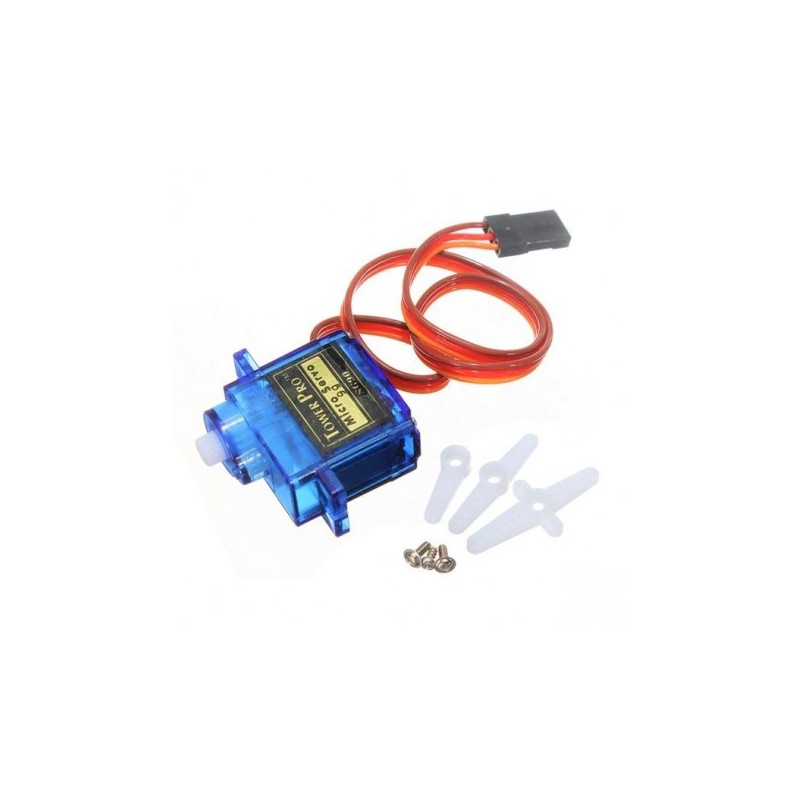
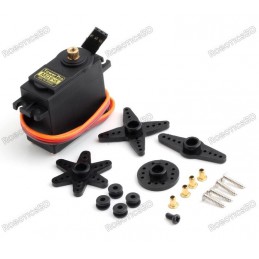
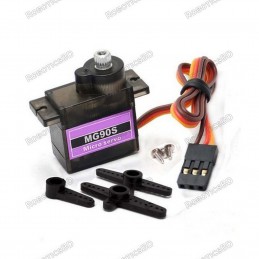
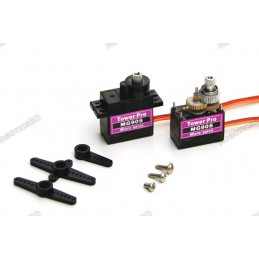
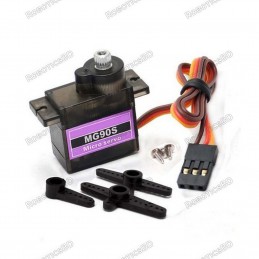
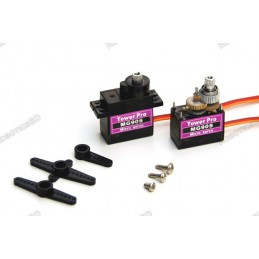
Continuous rotation servos are like regular hobby RC servos but modified to offer speed control instead of position control. They're essentially compact, affordable motors with integrated motor drivers. Add a wheel, and you've got a simple drive system for your robot, controllable with an RC signal or directly connected to a single microcontroller I/O line. - As the name implies, a "continuous rotation" servo cannot be controlled in terms of degree; it will rotate continuously either in the forward or reverse direction. However, you can control its speed. The code for operating a continuous rotation servo differs from that of a regular servo.
- To achieve continuous rotation to the left, use the command myServo.write(0). For rotation to the right, employ myServo.write(180). To halt the servo's movement, you'll need to find the exact value. You can try different values around the middle, such as myServo.write(90) or myServo.write(95), to determine the stopping point.
Enjoy controlling your robot and exploring its capabilities! |
RoboticsBD RoboticsBD RoboticsBD RoboticsBD RoboticsBD RoboticsBD RoboticsBD RoboticsBD RoboticsBD RoboticsBD
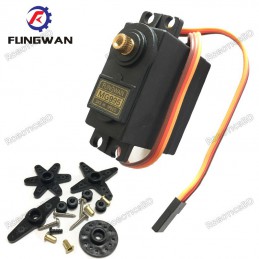
The SG90 360° Continuous Rotation Micro Servo Motor is a versatile and compact solution for robotics and automation projects. Unlike traditional servos that rotate to a fixed angle, this servo provides continuous rotation in both directions, functioning like a geared DC motor with an integrated motor controller. Its lightweight nylon gear construction ensures smooth operation, while the PWM control allows you to start, stop, and adjust direction with ease. With a nominal speed of 120 RPM at 5V and compatibility with Arduino using the Servo.h library, this motor is perfect for driving small robot wheels or rotating components in tight spaces. However, it requires an external 5V 3A power supply, as it cannot be powered directly from an Arduino board.
. Featured By RoboticsBD.
Product Images are shown for illustrative purposes only and may differ from the actual product.
RoboticsBD RoboticsBD RoboticsBD RoboticsBD RoboticsBD RoboticsBD RoboticsBD RoboticsBD RoboticsBD RoboticsBD
Features:
360° continuous shaft rotation for versatile movement control.
Built-in motor controller with PWM speed and direction adjustment.
Lightweight, durable nylon gear system for smooth operation.
Nominal rotation speed of 120 RPM at 5V with slower speed capability.
Compatible with Arduino Servo.h library for easy coding and control.
Compact and space-saving design ideal for micro-robotics applications.
RoboticsBD RoboticsBD RoboticsBD RoboticsBD RoboticsBD RoboticsBD RoboticsBD RoboticsBD RoboticsBD RoboticsBD
This servo motor requires a higher current and cannot be powered directly from the Arduino Uno or Mega. You will need to provide an additional 5V, 3A power supply in conjunction with the Arduino.
Please do not manually rotate the motor or gear shaft by hand, as this could cause permanent damage to the motor. |
RoboticsBD RoboticsBD RoboticsBD RoboticsBD RoboticsBD RoboticsBD RoboticsBD RoboticsBD RoboticsBD RoboticsBD
Applications:
Driving wheels on micro-robots and small robotic vehicles.
DIY automation projects requiring continuous rotation.
Educational robotics kits for learning servo and PWM control.
Rotating platforms, turntables, or simple pan/tilt mechanisms.
Compact hobby projects where space and weight are limited.
RoboticsBD RoboticsBD RoboticsBD RoboticsBD RoboticsBD RoboticsBD RoboticsBD RoboticsBD RoboticsBD RoboticsBD
| Model | SG90 360° Continuous Rotation |
| Type | Analog Micro Servo Motor |
| Rotation Range | Continuous (360°) |
| Nominal Speed | 120 RPM @ 5V |
| Minimum Speed | ~60 RPM |
| Operating Voltage | 5V DC |
| Recommended Power Supply | 5V, 3A external |
| Control Signal | PWM |
| Stopping Pulse Width | ~1500 µs |
| Gear Material | Nylon |
| Dimensions (Approx.) | 22.2 × 11.8 × 31 mm |
| Shipment Weight | 0.0128 kg |
| Shipment Dimensions | 5 × 5 × 3 cm |
Please allow 5% measuring deviation due to manual measurement.
RoboticsBD RoboticsBD RoboticsBD RoboticsBD RoboticsBD RoboticsBD RoboticsBD RoboticsBD RoboticsBD RoboticsBD
Documentation:
RoboticsBD RoboticsBD RoboticsBD RoboticsBD RoboticsBD RoboticsBD RoboticsBD RoboticsBD RoboticsBD RoboticsBD
Motor Connections
The built-in cable has a 3-pin female connector that is usually mated with a male header.
1×3 Female Connector
Brown = Ground
Red = 5V
Orange = PWM Signal
RoboticsBD RoboticsBD RoboticsBD RoboticsBD RoboticsBD RoboticsBD RoboticsBD RoboticsBD RoboticsBD RoboticsBD
RoboticsBD RoboticsBD RoboticsBD RoboticsBD RoboticsBD RoboticsBD RoboticsBD RoboticsBD RoboticsBD RoboticsBD
OUR EVALUATION RESULTS:
These servos are fairly strong little motors.
The servo runs on 5V with a current draw about 10mA at idle and 110mA to 250mA when being commanded to move depending on how it is being operated. Current draw can get up to a maximum of 300mA under a stall condition, so be aware of that. One SG90 can typically be driven off the power pin of an Arduino when experimenting as long as you don’t stall it, but motors in general are electrically noisy and power hungry devices. It is always better to drive them directly off of a power supply rather than trying to power from the on-board MCU regulator whenever possible
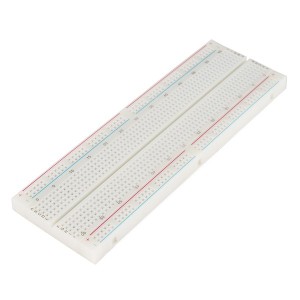
If you do decide to run it directly off the MCU, you can help avoid most problems by running the power and ground from the MCU over to a breadboard and then to the servo. By placing a fairly large electrolytic cap of around 470-1000uF across the power and ground on the breadboard, that will help to insulate the MCU from some of the power surges of the motor.
The program below can be used to exercise a 360 degree servo motor. It simply spins the servo in one direction for 3 seconds, pauses and the spins in the opposite direction for 3 seconds.
To use, hookup 5V and ground to the servo power and ground pins. Connect the PWM pin to pin 9 on the MCU, but this can be changed to any PWM capable pin.
RoboticsBD RoboticsBD RoboticsBD RoboticsBD RoboticsBD RoboticsBD RoboticsBD RoboticsBD RoboticsBD RoboticsBD
Package Includes:
1 x Servo Motor Micro SG90 360 Degree Continuous Rotation
RoboticsBD RoboticsBD RoboticsBD RoboticsBD RoboticsBD RoboticsBD RoboticsBD RoboticsBD RoboticsBD RoboticsBD
RoboticsBD RoboticsBD RoboticsBD RoboticsBD RoboticsBD RoboticsBD RoboticsBD RoboticsBD RoboticsBD RoboticsBD
Servo Motor Micro SG90 360 Degree Test Program
/*
  Exercise 360 degree Servo motor
  Simply runs servo in one direction for 2 seconds and then reverses direction
  Uses built-in Servo.h library
*/
#include "Servo.h"
#define SERVO_PIN 9   // Can use any PWM pin

Servo servo;          // creates servo object used to control the servo motor
//===============================================================================
//  Initialization
//===============================================================================
void setup()
{
  servo.attach(SERVO_PIN); // assigns PWM pin to the servo object
}
//===============================================================================
//  Main
//===============================================================================
void loop()
{
  servo.write(0); //Spin in one direction
  delay(3000);
  servo.write(90); // Stop
  delay(500);
  servo.write(180);  // Spin in opposite direction
  delay(3000);
  servo.write(90);  // Stop
  delay(500);
}