Product Description:
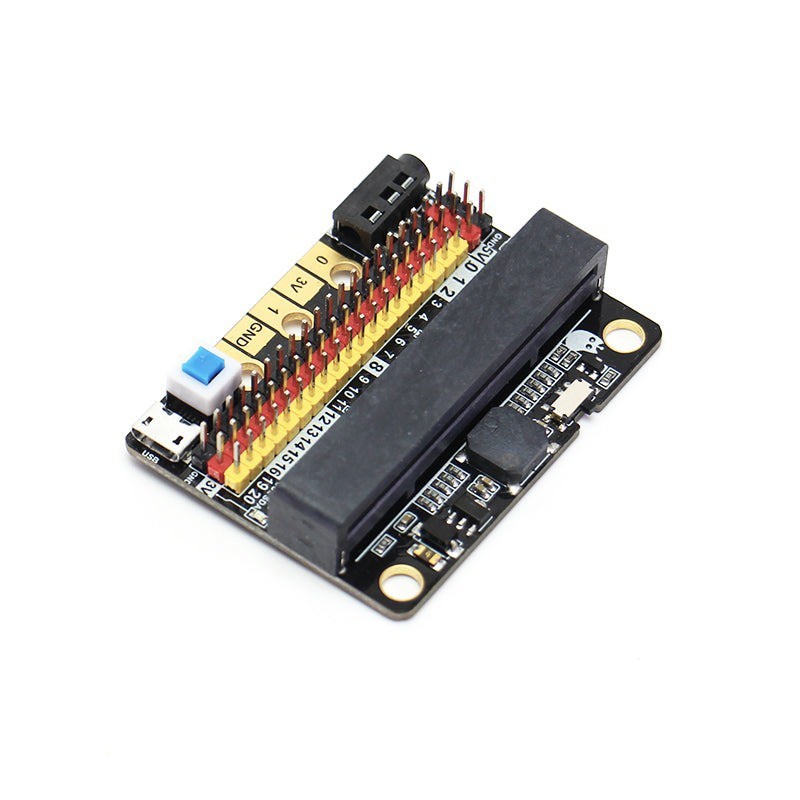
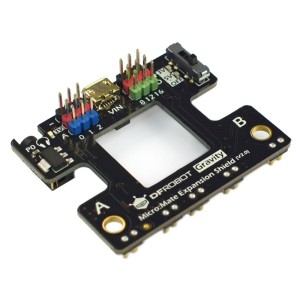
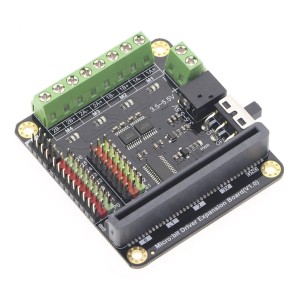
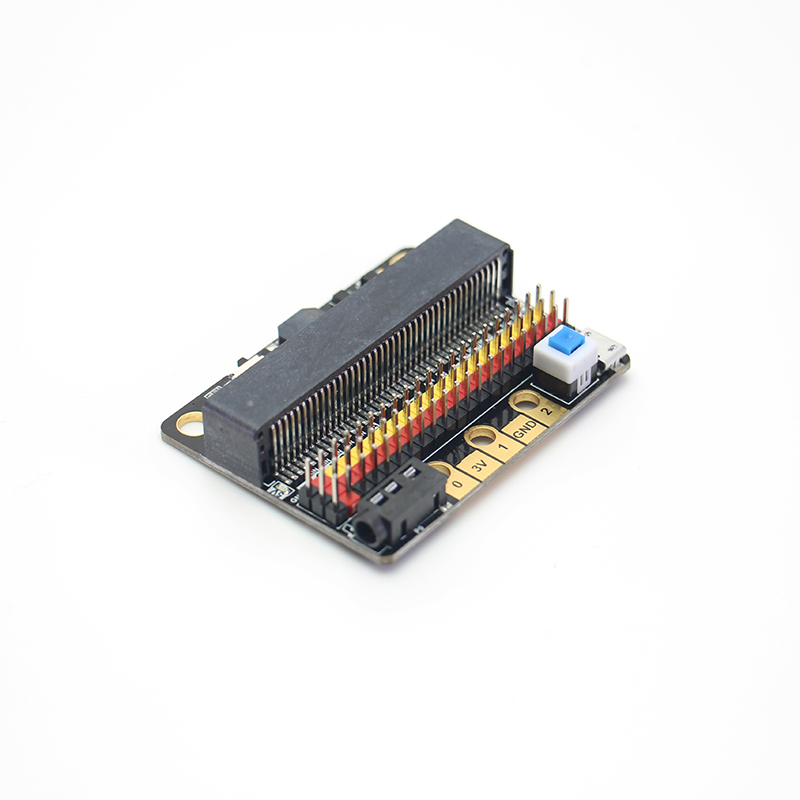
The IOBIT V2.0 Expansion Board is a compact, fully-featured breakout board designed for the BBC micro:bit, ideal for DIY electronics and small-scale robotics projects. It extends all IO pins of the micro:bit and adds enhanced features like an on-board buzzer, 3.5mm audio jack, 5V output support, and LEGO-compatible mounting holes, offering increased flexibility and power for more demanding applications.
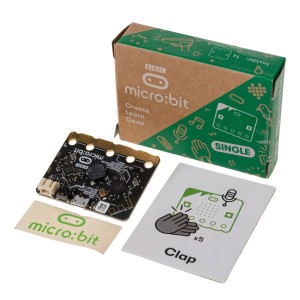
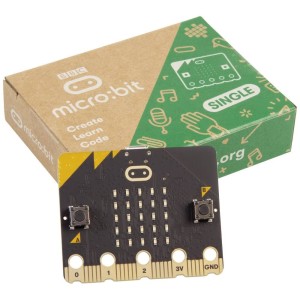
Whether you're prototyping with sensors, building interactive projects, or exploring audio and servo controls, IOBIT V2.0 simplifies your build while enhancing capability and safety. Note: micro:bit is not included.
Key Features:
All IO Pins Available: Full access to every micro:bit pin, including power and ground, for total control.
Buzzer & Audio Jack: Built-in buzzer connected to P0 (toggleable); 3.5mm jack for headphone or external speaker output.
LEGO-Compatible: Two LEGO mount points for creative assembly.
3PIN Sensor Interface: Color-coded (Yellow: Signal, Red: Power, Black: GND) 3-pin headers for reliable and intuitive sensor connections.
5V Output Support: Use 5V sensors and drive more powerful components (e.g., multiple 9g servos) with external power.
Micro:bit Gold Finger Mimicry: Emulates the micro:bit’s 5-pin layout for easy alligator clip attachment.
Protective Features: Includes 1A self-recovery fuse to prevent overcurrent damage.
USB Powered: Use a 5V USB power source to increase current supply—perfect for driving servos and external modules.
Technical Specifications:
Board Dimensions: 57mm x 44mm x 12mm
Power Input: USB 5V via Type-A socket
Operating Voltage: 3V to 5V
Max Output Current: 1A (via 3V/5V interfaces)
I2C Support: Pins 19 & 20 (reserved for I2C only)
SPI Pins: Pins 14 & 15 usable as SPI or digital I/O
Audio Output: Onboard buzzer and 3.5mm audio jack (connected to P0)
How to Use:
Powering the Board:
Using P0 with Buzzer:
Sensor Connections:
MakeCode Programming:
Directly use music, digital read/write, or analog read/write blocks.
Use the MakeCode console for live serial monitoring of sensor data.
Applications:
DIY electronic projects
Smart sensors and actuators
Servo/motor control systems
Educational STEM/STEAM kits
Audio-interactive installations
Micro:bit robotics and automation
Package Includes:
Why Choose IOBIT V2.0?
With enhanced power delivery, simplified wiring, LEGO mount compatibility, and rich I/O access, the IOBIT V2.0 is perfect for makers, students, and hobbyists seeking to expand the potential of their micro:bit projects. Its user-friendly layout and safe power management make it a reliable companion in every classroom or workbench.
Elevate your micro:bit creations with IOBIT V2.0—order now and power up your next great idea!
Introduction to IObit hardware:
5V power
Insert the USB power supply (5V 1A) as shown in Figure 1. Press the blue button at 2, and the red indicator light at 3 will light up. You can use the left 5V interface. 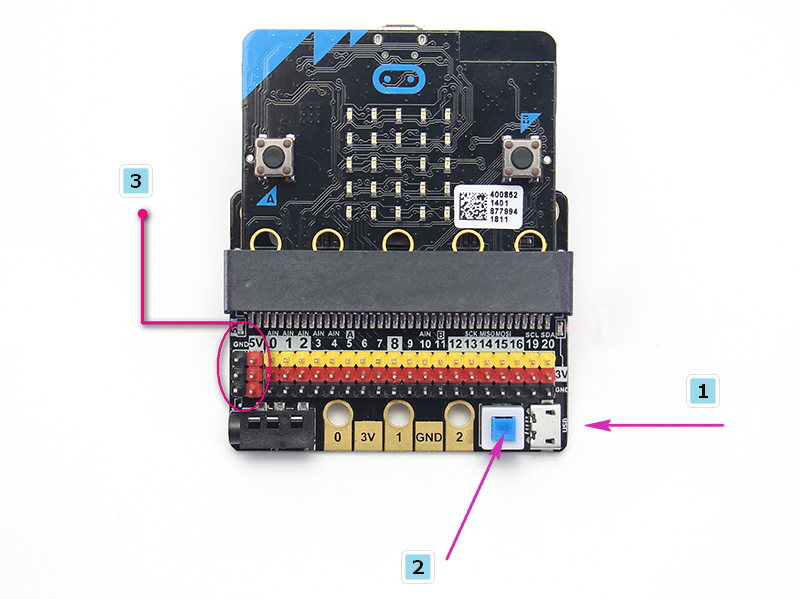
P0 buzzer
Toggle switch to turn off the buzzer function (see the silk screen on the back of the board for status) 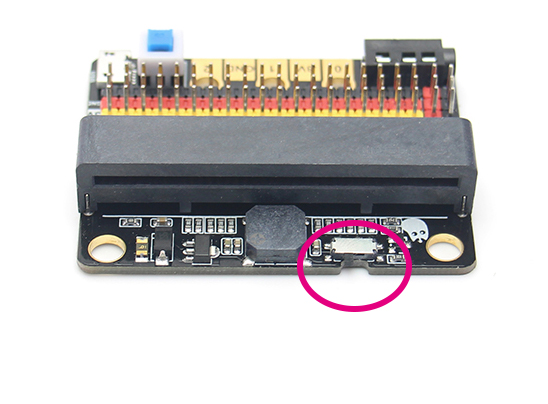
3Pin IO port leads
All the pins in the Micro:bit have been taken out without any reservation (Note: there are no P17 and P18 on the Micro:bit, it’s not that the IObit is not taken out)
Yellow corresponds to the different IO pins
Red corresponds to 3.3V/5V (with silkscreen)
Black corresponds to GND
5PIN gold fingers
The gold fingers of the Micro:bit are used to draw 3v, gnd, P1, P2, and P3 respectively. This is for users who prefer to use alligator clips
40P Micro:bit horizontal socket
Compact size socket
Board mounting holes and fixing
The two outermost holes are approximately 4.8 mm in diameter and are compatible with Lego friction pins with a spacing of 48 mm.
3.5mm audio interface
You can plug in a 3.5mm jack audio device and play the sound of the P0 pin.
5V power
Insert the USB power supply (5V 1A) as shown in Figure 1. Press the blue button at 2, and the red indicator light at 3 will light up. You can use the left 5V interface.
P0 buzzer
Toggle switch to turn off the buzzer function (see the silk screen on the back of the board for status)
3Pin IO port leads
All the pins in the Micro:bit have been taken out without any reservation (Note: there are no P17 and P18 on the Micro:bit, it’s not that the IObit is not taken out)
Yellow corresponds to the different IO pins
Red corresponds to 3.3V/5V (with silkscreen)
Black corresponds to GND
5PIN gold fingers
The gold fingers of the Micro:bit are used to draw 3v, gnd, P1, P2, and P3 respectively. This is for users who prefer to use alligator clips
40P Micro:bit horizontal socket
Compact size socket
Board mounting holes and fixing
The two outermost holes are approximately 4.8 mm in diameter and are compatible with Lego friction pins with a spacing of 48 mm.
3.5mm audio interface
You can plug in a 3.5mm jack audio device and play the sound of the P0 pin.