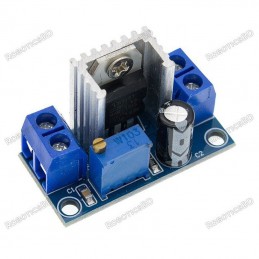
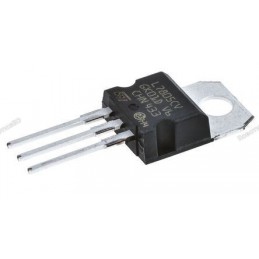
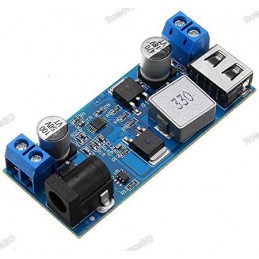
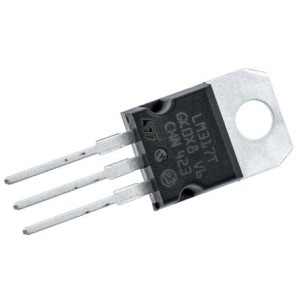
The LM317 Adjustable Voltage Regulator Module is a compact and versatile solution for powering your DIY electronics and embedded projects. Capable of delivering 1.25V to 37V DC at up to 1.5A, this module uses the reliable LM317 linear regulator IC, complete with a heatsink for stable performance. Unlike switching regulators, it offers a low-ripple output, making it ideal for sensitive analog and audio applications. With built-in thermal shutdown and current limiting, the module ensures safety and long-term durability. The board also includes mounting holes for permanent installations, making it a dependable choice for hobbyists, students, and professionals working with adjustable power requirements. Featured By RoboticsBD.
Product Images are shown for illustrative purposes only and may differ from the actual product.
RoboticsBD RoboticsBD RoboticsBD RoboticsBD RoboticsBD RoboticsBD RoboticsBD RoboticsBD RoboticsBD RoboticsBD
Features:
Adjustable output voltage range: 1.25V – 37V DC
Input voltage supported: 4.5V – 40V DC
Output current up to 1.5A with heatsink
Built-in thermal protection and current limiting
Compact PCB with mounting holes for secure installation
Low noise and ripple output compared to DC-DC converters
Reliable and widely used LM317 IC for stable regulation
RoboticsBD RoboticsBD RoboticsBD RoboticsBD RoboticsBD RoboticsBD RoboticsBD RoboticsBD RoboticsBD RoboticsBD
Applications:
Power supply design for DIY electronics and Arduino projects
Voltage adjustment in lab testing and prototyping
Audio and analog circuits requiring low-ripple regulated voltage
Battery-powered device regulation and charging applications
Educational and development board projects needing adjustable power
RoboticsBD RoboticsBD RoboticsBD RoboticsBD RoboticsBD RoboticsBD RoboticsBD RoboticsBD RoboticsBD RoboticsBD
| Input Voltage Range | 4.5V – 40V DC |
| Output Voltage Range | 1.25V – 37V DC |
| Maximum Output Current | Up to 1.5A |
| Regulator IC | LM317 Linear Regulator |
| Features | Adjustable Output, Low Ripple, Thermal Protection, Current Limiting |
| Mounting Holes | 2 × M3 Screw Compatible |
| Module Type | Linear Voltage Regulator Module |
| Dimensions (cm) | 3 × 3 × 3 cm |
| Shipment Weight | 0.0206 kg |
| Shipment Dimensions | 3 × 3 × 3 cm |
Please allow 5% measuring deviation due to manual measurement.
RoboticsBD RoboticsBD RoboticsBD RoboticsBD RoboticsBD RoboticsBD RoboticsBD RoboticsBD RoboticsBD RoboticsBD
Documentation:
Voltage Adjustment
The on-board multi-turn potentiometer allows for adjustment of the output voltage.
Turning the pot CW decreases the output voltage while turning it CCW increases it.
The available adjustment range will depend on the input voltage. The LM317 has a voltage drop of approximately 1.25V, so the typical range is from a minimum of 1.25V up to the input voltage – 1.25V. If powering the module with 12V for instance, the output range would be approximately 1.25V to 10.75V.
RoboticsBD RoboticsBD RoboticsBD RoboticsBD RoboticsBD RoboticsBD RoboticsBD RoboticsBD RoboticsBD RoboticsBD
Module Connections
Inputs and output connections on the module are made via small screw terminals that you can connect to using regular hookup wire or the pin on male jumper wires.
The connections are labeled on the back of the board due to the tight component packing on the top. The ground is common between the input and output terminals (not isolated).
Input Power
VIN = Input Voltage
GND = Ground for input
Output Power
VOUT = Output Voltage
GND = Ground for output
Note: Double-check that you have the input and output correctly hooked up before applying power or the module may be damaged.
RoboticsBD RoboticsBD RoboticsBD RoboticsBD RoboticsBD RoboticsBD RoboticsBD RoboticsBD RoboticsBD RoboticsBD
OUR EVALUATION RESULTS:
To wire an LM317 circuit on a breadboard takes an LM317 regulator IC, a resistor or two and a potentiometer if you want to be able to adjust the output voltage. An input/output filter cap is generally a good idea and you may need to add a heat sink to increase the power output capability. These circuits are easy and fun to create the first time or two, but after a while it is nice to just have the functionality without the fuss of needing to wire it up from scratch each time and that is where these modules come in handy and at a great price to boot!
As with any linear regulator, the power dissipation of the regulator is dependent on the difference between the input voltage and the output voltage along with the amount of current that is being drawn from the regulator. The larger the difference between the Vin and Vout, the higher the power dissipation which limits how much current can be drawn from the device.
To illustrate this concept, the table below gives some test results with the module using several different input voltages while the regulator output is set for 5V. As can be seen, with a 9V input the module can handle about 1A of continuous current before power dissipation gets too high without fan cooling. With a 32V input the module can only handle about 150mA. If this module was powered off our 7.5V AC Adapter which has a more ideal input/output voltage drop, it would get close to 1.5A with no cooling.
Since the module includes a heat sink, if a modest amount of air movement exists such as from a small fan, that allows the module to safely handle approximately double the amount of current before things get too toasty with all other things being equal.
RoboticsBD RoboticsBD RoboticsBD RoboticsBD RoboticsBD RoboticsBD RoboticsBD RoboticsBD RoboticsBD RoboticsBD
Output Current vs Voltage Difference
At 25°C ambient temperature, the regulator can supply up to 1A at 9V input and 5V output (rising to 1.5A+ with fan cooling). With 12V input to 5V output, the maximum current is about 550mA (up to 1.3A with cooling). At higher voltages, such as 32V input to 5V output, the current drops to 150mA (300mA with cooling). This shows how the available output current decreases as the input-to-output voltage difference increases.
RoboticsBD RoboticsBD RoboticsBD RoboticsBD RoboticsBD RoboticsBD RoboticsBD RoboticsBD RoboticsBD RoboticsBD
Package Includes:
1 x LM317 Adjustable Voltage Regulator Module
RoboticsBD RoboticsBD RoboticsBD RoboticsBD RoboticsBD RoboticsBD RoboticsBD RoboticsBD RoboticsBD RoboticsBD
RoboticsBD RoboticsBD RoboticsBD RoboticsBD RoboticsBD RoboticsBD RoboticsBD RoboticsBD RoboticsBD RoboticsBD