Product Description
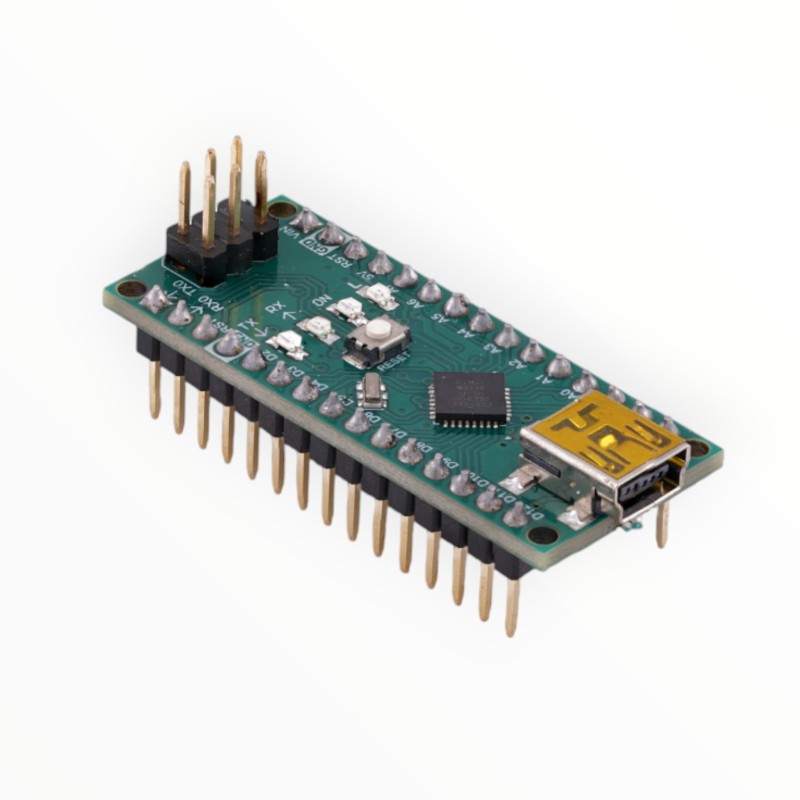
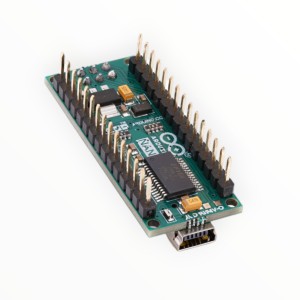
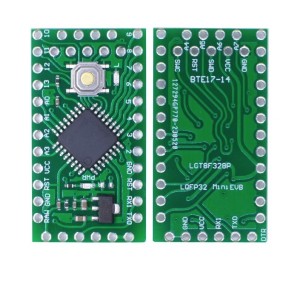
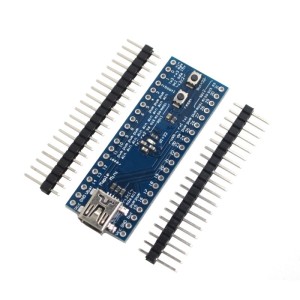
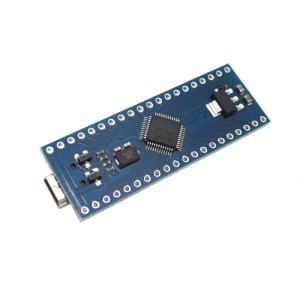
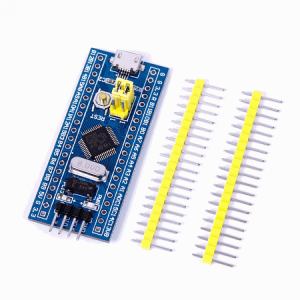
The Arduino Nano Green Board Edition is a compact, breadboard-friendly microcontroller board based on the ATmega328P, designed to deliver reliability and performance very close to the original Arduino Nano. Built using high-quality components and a stable USB interface, it is ideal for prototyping, embedded systems, DIY electronics, robotics, and educational projects.
This version maintains the same pinout, functionality, and operating behavior as the standard Nano, making it a drop-in replacement for existing Arduino Nano projects. Its small footprint and soldered headers make it perfect for breadboard use, while the Mini-USB port offers easy programming and debugging through the Arduino IDE.
Key Features
• Based on the ATmega328P microcontroller for Arduino-compatible performance
• Fully breadboard-friendly design with pre-soldered headers
• Mini-USB port for uploading code and serial communication
• 14 digital I/O pins, including 6 PWM outputs
• 8 analog input pins for sensor interfacing
• Automatically switches between USB and external power
• Compact, lightweight form factor suitable for embedded and wearable projects
• High-quality PCB with stable operation and consistent performance
• Works seamlessly with Arduino IDE, libraries, and example sketches
Technical Specifications
Microcontroller: ATmega328P
Operating Voltage: 5V
Input Voltage (VIN): 6–12V
Digital I/O Pins: 14 (6 PWM capable)
Analog Input Pins: 8
DC Current per I/O Pin: 20 mA
Flash Memory: 32 KB (2 KB used by bootloader)
SRAM: 2 KB
EEPROM: 1 KB
Clock Speed: 16 MHz
USB Connector: Mini-USB
Interfaces: UART, I2C, SPI
Dimensions: Approx. 45 x 18 mm
Weight: Approx. 7 g
How to Use
Connect the Nano to your computer using a Mini-USB cable.
Open the Arduino IDE and select the board type as Arduino Nano.
Choose the correct processor option (ATmega328P).
Select the COM port and upload your sketch.
The board will automatically switch power sources when external VIN or USB is connected.
Applications
• Robotics and motor control
• Sensor monitoring and data acquisition
• Wearable gadgets and IoT prototypes
• Educational electronics and STEM learning
• Compact embedded systems
• DIY automation projects
Package Includes
• 1 × Arduino Nano Green Board Edition (ATmega328P)
Why Choose This Version?
This high-quality Nano Green Edition offers the same layout, behavior, and coding experience as the classic Arduino Nano while remaining cost-effective. It uses genuine-grade components, provides stable performance, and is suitable for both beginners and advanced makers who need a dependable Nano-compatible module.