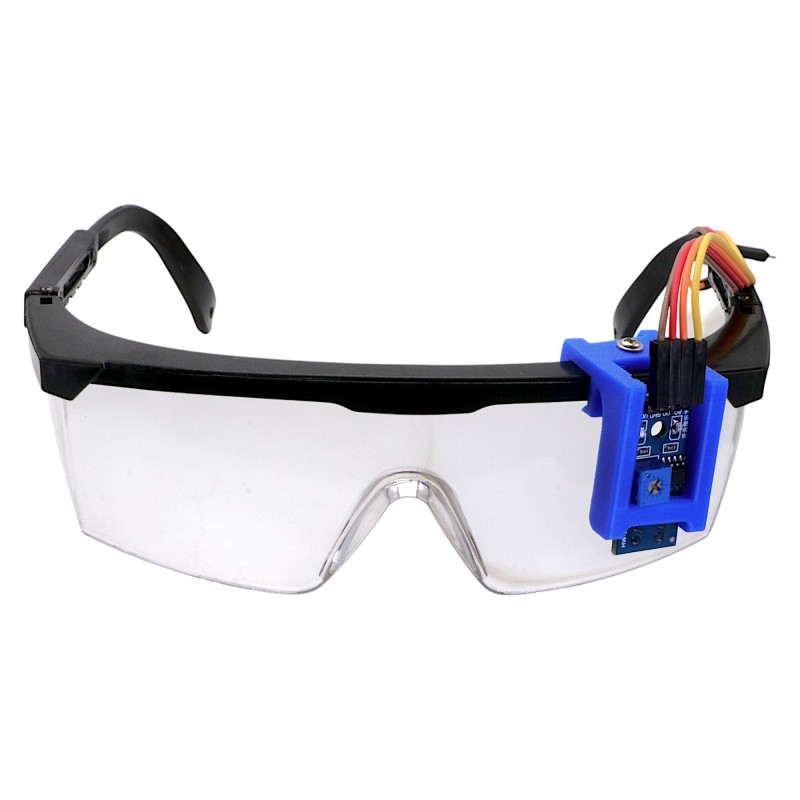
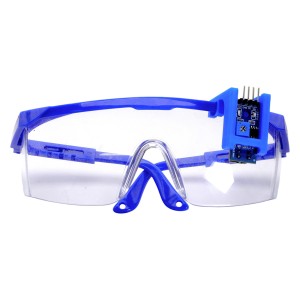
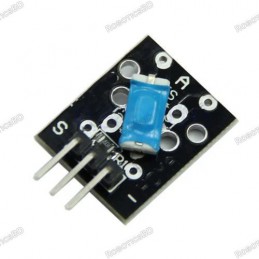
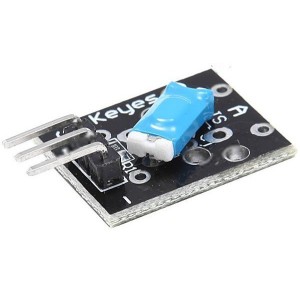
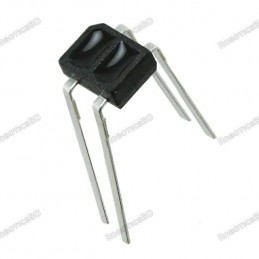
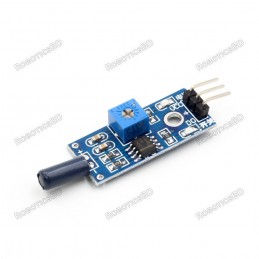
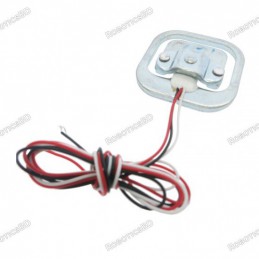
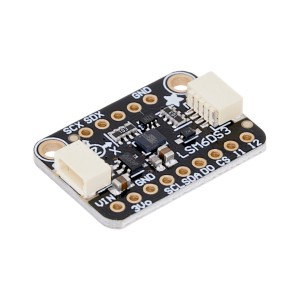
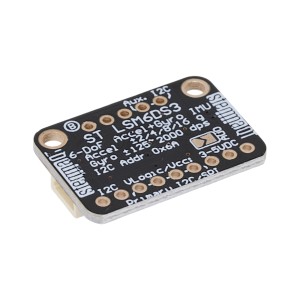
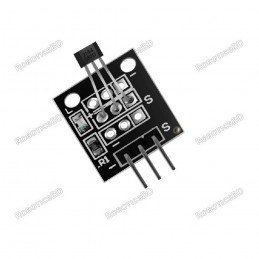
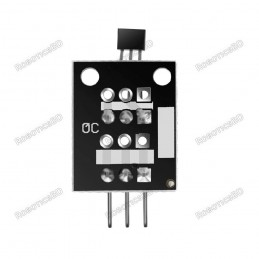
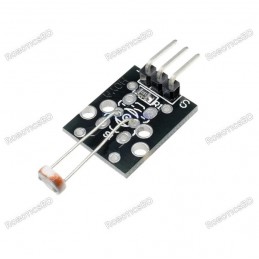
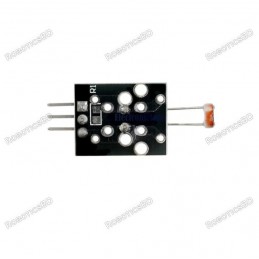
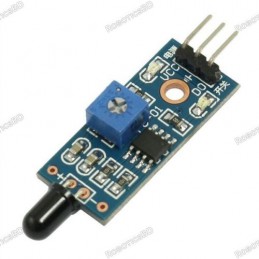
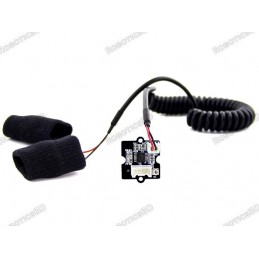
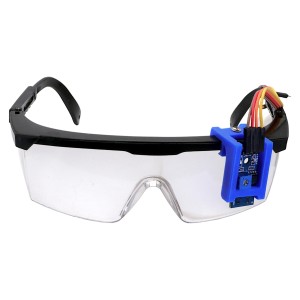
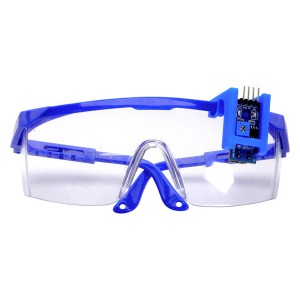
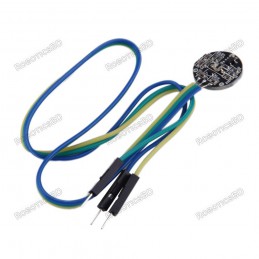
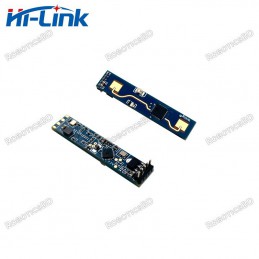
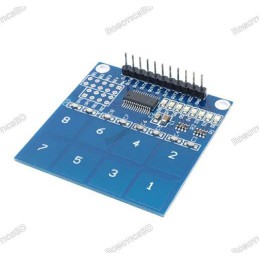
গগলসটি পরার সময় খেয়াল রাখতে হবে যেন আইব্লিঙ্ক সেন্সরটি যেন চোখের বরাবর আসে। যদি না আসে তাহলে গগলসটি নাড়িয়ে চোখে এমনভাবে সেট করতে হবে যেন সেন্সরটি সরাসরি চোখের উপরে থাকে। দরকার পড়লে সেন্সরের পজিশন চেঞ্জ করে নিতে পারেন। - **অনেক্ষন পরে থাকার উপযোগী নয়।
**কোনো মেডিকেল ডিভাইস নয়। |
How to Use
- Wear the goggles and align sensor above the eye
- Read analog for blink intensity & waveform
- Read digital for on/off blink detection
- Adjust sensitivity with screwdriver

Analog Blink Detection (Waveform)
void setup() {
  Serial.begin(9600);  // Start serial communication
}

void loop() {
  int sensorValue = analogRead(A0);  // Read analog pin
  Serial.println(sensorValue);       // Print to Serial Plotter
  delay(10);                         // Slight delay for smooth plotting
}
View on Arduino Serial Plotter
- Upload the code to your Arduino
- Go to Tools → Serial Plotter in the Arduino IDE
- Set baud rate to 9600
- Observe the waveform representing eye blink strength and duration

This is a demo of an eyeblink sensor's analog value variation shown on the Arduino Serial Plotter.
Digital Blink Detection (On/Off Signal)
void setup() {
  Serial.begin(9600);     // Start serial communication
  pinMode(3, INPUT);      // Digital pin D3 as input
}

void loop() {
  int blinkState = digitalRead(3);  // Read digital output
  Serial.println(blinkState);       // 1 = blink detected, 0 = no blink
  delay(100);                       // Delay to avoid flooding the serial
}
View on Arduino Serial Monitor
- Upload the code to your Arduino
- Go to Tools → Serial Monitor
- Set baud rate to 9600
- Watch for "1" (blink) and "0" (no blink) in real-time
The Eye Blink Detection Analog & Digital Sensor with Goggles is a powerful tool designed for Arduino enthusiasts, developers, and researchers interested in human-computer interaction and biometric sensing. This ready-to-use module combines an amplified analog signal output and digital threshold detection with a pair of safety goggles to provide a non-intrusive, hands-free solution for tracking eye blinks with precision.
Why Analog Sensor?
Unlike traditional digital-only blink sensors that merely distinguish between open and closed eyes, this advanced analog+digital sensor outputs waveforms. These waveforms allow you to capture full, partial, and quick blinks, as well as unusual eye activity like prolonged open states—making it ideal for more sophisticated projects such as fatigue detection, assistive tech, and research.
Key Features:
Dual analog and digital signal output
Noise-canceling and signal amplification circuitry
No soldering required: Plug & Play with Arduino using color-coded pins
Adjustable sensitivity via onboard potentiometer
Comfortable integrated goggle frame with mount
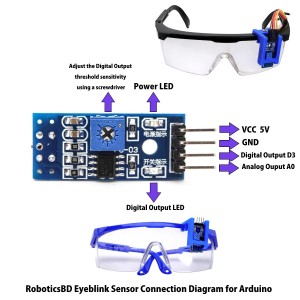
Easy-to-follow connection diagram included
Lightweight, adjustable, and reusable
Detects subtle blink variations (partial blinks, double blinks, long blinks)
Technical Specifications:
Power Supply: 5V (Compatible with Arduino)
Output: Analog (A0), Digital (D3)
Adjustable sensitivity (screwdriver adjustment)
Indicator LEDs for power and digital output
Goggle-mounted for fixed eye alignment
How to Use:
Wear the goggles and ensure the sensor aligns directly with your eye.
Connect the sensor pins (VCC, GND, A0, D3) to your Arduino or compatible development board.
Use the analog signal for waveform-based detection or the digital signal for simple blink recognition.
Adjust the threshold if needed using the onboard potentiometer.
Applications:
Eye-controlled interfaces
Assistive devices for differently-abled users
Human-computer interaction projects
Drowsiness/fatigue detection systems
Robotics and automation
Educational and research experiments
Package Includes:
Why Choose This Product?
Whether you're building an accessibility device, experimenting with biometric feedback, or learning about biosignals, this goggle-integrated blink sensor gives you the flexibility of both analog and digital outputs in one simple, no-soldering-required solution.
Note:
Unlock new possibilities in eye-based control and biometric sensing—order your Eye Blink Detection Sensor with Goggles today!
| General Specification |
| Operating Voltage (VDC) | 5V |
| Supply Current (A) | ≥ 20mA |
| Optimal Sensing Distance(mm) | 3 |
| Output Format | Analog and Digital Voltage |
| Length (mm) | 42 |
| Width (mm) | 10 |
| Height (mm) | 10 |
| Weight (gm) | 2 |
| Shipment Weight | 0.005 kg |
| Shipment Dimensions | 12 × 8 × 2.5 cm |
Please allow 5% measuring deviation due to manual measurement.
Package Includes :