• Banner

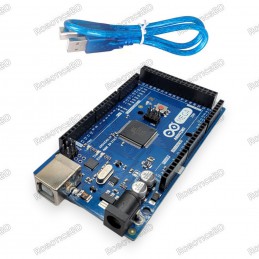
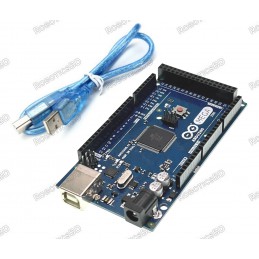
    Arduino Mega 2560 CH340 Robotics Bangladesh
    • Arduino Mega 2560 CH340 Robotics Bangladesh
    • Arduino Mega 2560 CH340 Robotics Bangladesh
    • Arduino Mega 2560 CH340 Robotics Bangladesh

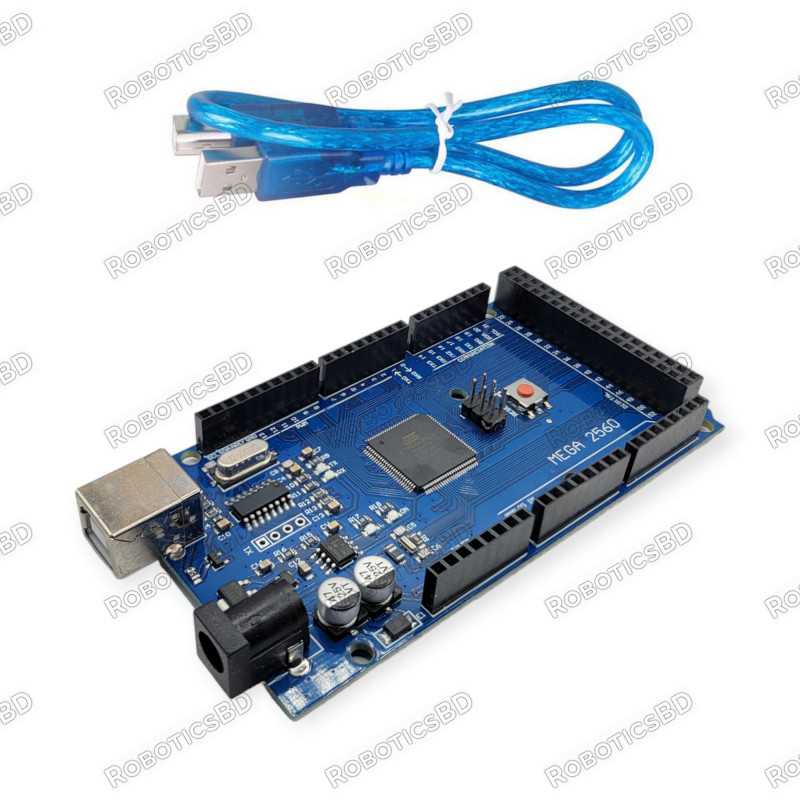
    Arduino Mega 2560 CH340

    RBD-1397

    • Programmer: CH340
    • Operating Voltage 5V
    • Input Voltage (recommended) 7-12V
    • Input Voltage (limits) 6-20V
    • Digital I/O Pins 54 (of which 15 provide PWM output)
    • Analog Input Pins 16
    • DC Current per I/O Pin 40 mA
    • DC Current for 3.3V Pin 50 mA
    • Flash Memory 256 KB of which 8 KB used by bootloader
    BDT 1,425
    BDT 1,425 BDT 1,425 BDT 1,425 BDT 1,425
    Tax excluded Tax includedTax excludedTax includedTax excluded
    BDT 1,425 Tax excluded
    BDT 1,425 Tax included
    BDT 0 Tax
    BDT 1,425 Tax excluded
    BDT 0 Tax
    BDT 1,425 Tax included
    Quantity
    In-Stock
    53 Items

    179 people have purchased this item
    6 people recently added this item to the cart
    53 items in stock
    Description

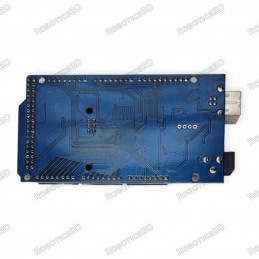
    The ATmel MCU ATMEGA16U2 MEGA 2560 R3 Improved Version CH340G Board is a micro-controller board base on the ATmega2560. It has a USB host interface to connect with Android based phones, base on the MAX3421e IC. RoboticsBD

    It has 54 digital input/output pins (of which 15 can be used as PWM outputs); 16 analog inputs, 4 UARTs (hardware serial ports), a 16 MHz crystal oscillator; a USB connection, a power jack, an ICSP header, and a reset button. The MEGA ADK is base on the Mega 2560. Similar to the Mega 2560 and Uno, it features an ATmega8U2 program as a USB-to-serial converter. Revision 3 of the Mega ADK board has a resistor pulling the 8U2 HWB line to ground, making it easier to put into DFU(Device Firmware Upgrade) mode. RoboticsBD

    The board has the following new features:

    • 1.0 pin-out: added SDA and SCL pins that are near to the AREF pin and two other new pins placed near to the RESET pin, the IOREF that allow the shields to adapt to the voltage provided from the board. In the future, shields will be compatible both with the board that uses the AVR, which operate with 5V and with the Arduino Due that operates with 3.3V. The second one is a not connected pin, that is reserved for future purposes.
    • Stronger RESET circuit.

    The Mega Arduino R3 Android Accessory Development Kit (ADK) can be power via the USB connection or with an external power supply. The power source is select automatically. External (non-USB) power can come either from an AC-to-DC adapter (wall-wart) or battery. The adapter can be connected by plugging a 2.1mm center-positive plug into the board’s power jack. RoboticsBD

    Leads from a battery can be inserted in the GND and Vin pin headers of the POWER connector. Because the Mega R3 Android Accessory Development Kit (ADK) is a USB Host, the phone will attempt to draw power from it when it needs to charge. When the ADK is power over USB, 500mA total is available for the phone and board.

    Difference USB controller version:

    Because Atmel is moving more and more of their production capacity to surface mount ICs, the DIP packaged ATmega is becoming more and more difficult to get. The board is identical to the PTH version of the Uno, but you won't be able to remove the ATmega without some hot-air. This change shouldn't affect most users. Besides - when was the last time you managed to destroy an ATmega and needed to repair an Arduino board? Those things are nearly indestructible. Featured By RoboticsBD.

    Product Images are shown for illustrative purposes only and may differ from the actual product.

    RoboticsBD RoboticsBD RoboticsBD RoboticsBD RoboticsBD RoboticsBD RoboticsBD RoboticsBD RoboticsBD RoboticsBD 


    *Please note that the boards have a CH340G USB-Controller rather than ATmega16 like regular MEGA2560. They are recognized on Linux without any additional drivers. Mac OS and Windows users may need to install an additional driver. RoboticsBD

    Features :

    Arduino Mega 2560 Improved version CH340G Board:
    1. Programmer: CH340
    2. Operating Voltage 5V
    3. Input Voltage (recommended) 7-12V
    4. Input Voltage (limits) 6-20V
    5. Digital I/O Pins 54 (of which 15 provide PWM output)
    6. Analog Input Pins 16
    7. DC Current per I/O Pin 40 mA
    8. DC Current for 3.3V Pin 50 mA
    9. Flash Memory 256 KB of which 8 KB used by bootloader
    10. SRAM 8 KB
    11. EEPROM 4 KB
    12. Clock Speed 16 MHz

    RoboticsBD RoboticsBD RoboticsBD RoboticsBD RoboticsBD RoboticsBD RoboticsBD RoboticsBD RoboticsBD RoboticsBD 
    General Specification
    Input Voltage (recommended)7-12V
    Digital I/O Pins54 (of which 15 provide PWM output)
    Analog Input Pins16
    Flash Memory256 KB of which 8 KB used by boot-loader.
    MicrocontrollerATmega2560
    Country of Origin/ManufactureChina
    PWM Output Pins14
    Dimensions (mm) LxWxH110 x 53 x 15 mm.
    Weight (gm)35
    Shipment Weight0.037 kg
    Shipment Dimensions10.5 × 5.5 × 1.5 cm

    Please allow 5% measuring deviation due to manual measurement.

    RoboticsBD RoboticsBD RoboticsBD RoboticsBD RoboticsBD RoboticsBD RoboticsBD RoboticsBD RoboticsBD RoboticsBD 
    Power
    The external power regulator can supply up to 1500mA. 750mA is available for the phone and MEGA ADK board. An additional 750mA is allocated for any actuators and sensors attached to the board. A power supply must be capable of providing 1.5A to use this much currentThe board can operate on an external supply of 5.5 to 16 volts. If supply with less than 7V, however, the 5V pin may supply less than five volts and the board may be unstable. If using more than 12V, the voltage regulator may overheat and damage the board. The recommended range is 7 to 12 volts. The power pins are as follows:

    • VIN. The input voltage to the Arduino board when it’s using an external power source (as opposed to 5 volts from the USB connection or another regulated power source). You can supply voltage through this pin, or, if supplying voltage via the power jack, access it through this pin.
    • 5V. This pin outputs a regulated 5V from the regulator on the board. The board can be supply with power either from the DC power jack (7 – 12V), the USB connector (5V), or the VIN pin of the board (7-12V). Supplying voltage via the 5V or 3.3V pins bypasses the regulator, and can damage your board. We don’t advise it.
    • 3V3. A 3.3 volt supply generated by the onboard regulator. Maximum current draw is 50 mA.
    • GND. Ground pins.
    • IOREF. This pin on the Arduino board provides the voltage reference with which the microcontroller operates. A properly configured shield can read the IOREF pin voltage and select the appropriate power source or enable voltage translators on the outputs for working with the 5V or 3.3V.

    Memory

    The Mega R3 Android Accessory Development Kit (ADK) has 256 KB of flash memory for storing code (of which 8 KB is used for the bootloader); 8 KB of SRAM and 4 KB of EEPROM (which can be read and written with the EEPROM library).

    Input and Output

    Each of the 50 digital pins on the Mega R3 Android Accessory Development Kit (ADK) can be used as an input or output; using pinMode(), digitalWrite(), and digitalRead() functions. They operate at 5 volts. Each pin can provide or receive a maximum of 40 mA . has an internal pull-up resistor (disconnect by default) of 20-50 kOhm. In addition, some pins have specialized functions:

        • Serial : 0 (RX) and 1 (TX), Serial 1: 19 (RX) and 18 (TX), Serial 2: 17 (RX) and 16 (TX), Serial 3: 15 (RX) and 14 (TX). Use to receive (RX) and transmit (TX) TTL serial data. Pins 0 and 1 are also connected to the corresponding pins of the ATmega8U2 USB-to-TTL Serial chip.
        • External Interrupts: 2 (interrupt 0), 3 (interrupt 1), 18 (interrupt 5), 19 (interrupt 4), 20 (interrupt 3), and 21 (interrupt 2). These pins can be configured to trigger an interrupt on a low value, a rising or falling edge, or a change in value. See the attachInterrupt() function for details.
        • PWM: 2 to 13 and 44 to 46. Provide 8-bit PWM output with the analogWrite() function.
        • SPI: 50 (MISO), 51 (MOSI), 52 (SCK), 53 (SS). These pins support SPI communication using the SPI library. The SPI pins are also broken out on the ICSP header, which is physically compatible with the Uno, Duemilanove, and Diecimila.
        • USB Host: MAX3421E.

    MAX3421E
    • communicate with Arduino with the SPI bus. So it uses the following pins:
    • Digital: 7 (RST), 50 (MISO), 51 (MOSI), 52 (SCK).
      Note: Please do not use Digital pin 7 as input or output because is used in the communication with MAX3421E
    • Non broken out on headers: PJ3 (GP_MAX), PJ6 (INT_MAX), PH7 (SS).
    • LED: 13. There is a built-in LED connected to digital pin 13. When the pin is HIGH value, the LED is on, when the pin is LOW, it’s off.
    • TWI: 20 (SDA) and 21 (SCL). Support TWI communication using the Wire library. Note that these pins are not in the same location as the TWI pins on the Duemilanove or Diecimila.

    The Mega R3 Android Accessory Development Kit (ADK) has 16 analog inputs, each of which provides 10 bits of resolution (i.e. 1024 different values). By default, they measure from ground to 5 volts, though is it possible to change the upper end of their range using the AREF pin and analogReference() function. There are a couple of other pins on the board:

    • AREF. Reference voltage for the analog inputs. Use with analogReference().
    • Reset. Bring this line LOW to reset the micro-controller. Typically used to add a reset button to shields which block the one on the board.

    Communication

    The Mega R3 Android Accessory Development Kit (ADK) has a number of facilities for communicating with a computer, another Arduino, or other micro-controllers. The ATmega2560 provides four hardware UARTs for TTL (5V) serial communication. An ATmega8U2 on the board channels one of these over USB and provides a virtual com port to software on the computer (Windows machines will need a .inf file, but OSX and Linux machines will recognize the board as a COM port automatically. The Arduino software includes a serial monitor which allows simple textual data to be sent to and from the board.

    The RX and TX LEDs on the board will flash when data is being transmitted via the ATmega8U2/16U2 chip and USB connection to the computer (but not for serial communication on pins 0 and 1). A Software-serial library allows for serial communication on any of the MEGA ADK’s digital pins. The ATmega2560 also supports TWI and SPI communication. The Arduino software includes a Wire library to simplify the use of the TWI bus, see the Wire library for details. For SPI communication, use the SPI library.

    The USB host interface given by MAX3421E IC allows the Arduino MEGA ADK to connect and interact to any type of device that has a USB port. For example, allows you to interact with many types of phones, controlling Canon cameras, interfacing with keyboard, mouse and games controllers as Wiimote and PS3.

    Programming

    The Mega R3 Android Accessory Development Kit (ADK) can be the program with the Arduino software (download). For details, see the reference and tutorials. The ATmega2560 on the MEGA ADK comes preburn with a boot-loader (the same on Mega 2560) that allows you to upload new code to it without the use of an external hardware programmer. It communicates using the original STK500v2 protocol (reference, C header files).

    You can also bypass the bootloader and program the microcontroller through the ICSP (In-Circuit Serial Programming) header using Arduino ISP or similar; see these instructions for details. The ATmega8U2 firmware source code is available in the Arduino repository. The ATmega8U2 is load with a DFU bootloader, which can be activated by:

    • On Rev1 boards: connecting the solder jumper on the back of the board (near the map of Italy) and then resetting the 8U2.
    • On Rev2 or later boards: there is a resistor that pulling the 8U2/16U2 HWB line to ground, making it easier to put into DFU mode. You can then use Atmel’s FLIP software (Windows) or the DFU programmer (Mac OS X and Linux) to load a new firmware. Or you can use the ISP header with an external programmer (overwriting the DFU bootloader). See this user-contributed tutorial for more information.

    Automatic (Software) Reset

    Rather then requiring a physical press of the reset button before an upload, the Arduino MEGA ADK is designed in a way that allows it to be reset by software running on a connected computer. One of the hardware flow control lines (DTR) of the ATmega8U2 is connected to the reset line of the ATmega2560 via a 100 nano-farad capacitor. When this line is asserted (taken low), the reset line drops long enough to reset the chip. The Arduino software uses this capability to allow you to upload code by simply pressing the upload button in the Arduino environment.

    This means that the boot-loader can have a shorter timeout, as the lowering of DTR can be well-coordinated with the start of the upload. This setup has other implications. When the MEGA ADK is connected to either a computer running Mac OS X or Linux, it resets each time a connection is made to it from software (via USB). For the following half-second or so, the bootloader is running on the MEGA ADK. While it is programmed to ignore malformed data (i.e. anything besides an upload of new code), it will intercept the first few bytes of data sent to the board after a connection is open.

    If a sketch running on the board receives one-time configuration or other data when it first starts; make sure that the software with which it communicates waits for a second after opening the connection and before sending this data. The MEGA ADK contains a trace that can be cut to disable the auto-reset. The pads on either side of the trace can be solder together to re-enable it. It’s the label “RESET-EN”. You may also be able to disable the auto-reset by connecting a 110-ohm resistor from 5V to the reset line; see this forum thread for details.

    USB Over-current Protection

    The Mega R3 Android Accessory Development Kit (ADK) has a resettable polyfuse that protects your computer’s USB ports from shorts and overcurrent. Although most computers provide their own internal protection, the fuse provides an extra layer of protection. If more than 500 mA is applied to the USB port. The fuse will automatically break the connection until the short or overload is removed.

    Physical Characteristics and Shield Compatibility

    The maximum length and width of the Mega R3 Android Accessory Development Kit (ADK) PCB are 4 and 2.1 inches respectively; with the USB connector and power jack extending beyond the former dimension. Three screw holes allow the board to be attached to a surface or case. Note that the distance between digital pins 7 and 8 is 160 mil (0.16″); not an even multiple of the 100 mil spacing of the other pins. The MEGA ADK is designed to be compatible with most shields design for the Uno, Diecimila or Duemilanove.

    Digital pins 0 to 13 (and the adjacent AREF and GND pins), analog inputs 0 to 5; the power header, and ICSP header are all in equivalent locations. Further, the main UART (serial port) is located on the same pins (0 and 1); as are external interrupts 0 and 1 (pins 2 and 3 respectively). SPI is available through the ICSP header on both the MEGA ADK and Duemilanove / Diecimila.

    Please note that I2C is not located on the same pins on the MEGA ADK (20 and 21); as the Duemilanove / Diecimila (analog inputs 4 and 5). 

    Package Includes :

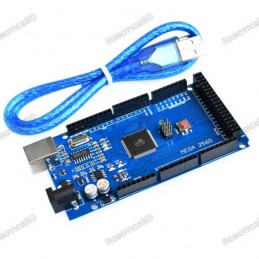
    1 x Arduino Mega 2560 CH340

    1 x Cable for Arduino Mega 2560.

    RoboticsBD RoboticsBD RoboticsBD RoboticsBD RoboticsBD RoboticsBD RoboticsBD RoboticsBD RoboticsBD RoboticsBD 
    RoboticsBD RoboticsBD RoboticsBD RoboticsBD RoboticsBD RoboticsBD RoboticsBD RoboticsBD RoboticsBD RoboticsBD 
    Product Details
    RBD-1397
    53 Items

    Specific References

    EAN13
    1397
    Comments (0)
    Grade
    No customer reviews for the moment.
    16 other products in the same category:
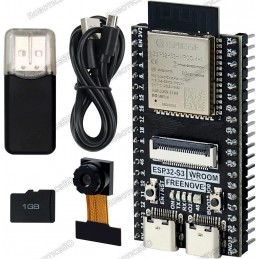
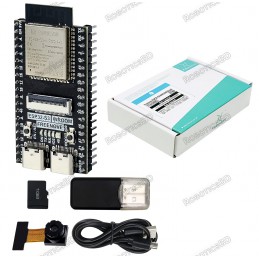
    ESP32-S3 CAM Development Board WiFi Bluetooth Module N16R8 OV5640 Camera Robotics Bangladesh

    Reference: RBD-2765

    ESP32-S3 CAM Development Board WiFi Bluetooth Module N16R8 with Camera

    (0)
    ESP32-S3-WROOM-1 module with Wi-Fi and Bluetooth 5 (LE)Dual-core 32-bit LX7 CPU up to 240MHz with AI accelerationIncludes camera for image capture and processing8MB PSRAM and 16MB Flash memory for advanced applicationsRich peripheral interfaces: SPI, I2C, I2S, LCD, USB OTG, UART, PWM, cameraCompact 57 × 28mm design, ideal for IoT, AI, and vision-based...
    BDT 1,566
    BDT 1,566 tax incl.
    BDT 1,566 tax excl.
    BDT 1,566 tax excl.
    BDT 1,566 tax incl.
    BDT 1,566 tax incl.
    BDT 0 Tax
    BDT 1,566 tax excl.
    BDT 1,566 tax excl.
    BDT 0 Tax
    BDT 1,566 tax incl.
    More ESP32-S3 CAM Development Board WiFi Bluetooth Module N16R8 with Camera
    In-Stock
    In stock: 57
    Arduino Mega 2560 Rev3 Original Robotics Bangladesh Arduino Mega 2560 Rev3 Original Robotics Bangladesh

    Reference: RBD-3629

    Brand: Arduino Official

    Arduino Mega 2560 Rev3 Original

    (0)
    The Arduino Mega 2560 is a microcontroller board based on the ATmega2560. It has 54 digital input/output pins (of which 15 can be used as PWM outputs), 16 analog inputs, 4 UARTs (hardware serial ports), a 16 MHz crystal oscillator, a USB connection, a power jack, an ICSP header, and a reset button.Imported from DFrobot (02-July-2025)Made in ItalyArduino...
    BDT 8,445
    BDT 8,445 tax incl.
    BDT 8,445 tax excl.
    BDT 8,445 tax excl.
    BDT 8,445 tax incl.
    BDT 8,445 tax incl.
    BDT 0 Tax
    BDT 8,445 tax excl.
    BDT 8,445 tax excl.
    BDT 0 Tax
    BDT 8,445 tax incl.
    More Arduino Mega 2560 Rev3 Original
    In stock
    In stock: 4
    ESP-32S ESP-WROOM-32 Development Board 38P NodeMCU Robotics Bangladesh ESP-32S ESP-WROOM-32 Development Board 38P NodeMCU Robotics Bangladesh

    Reference: RBD-1820

    ESP-32S ESP-WROOM-32 Development Board 38P NodeMCU

    (0)
    38 Pin version 2.4GHz Dual-Mode WiFi + Bluetooth Development Board, 38PIN Ultra-Low power consumption works perfectly with the IDE A high-quality USB cable is essential for this board to ensure sufficient current supply; otherwise, your board may not be recognized by the Windows Device Manager. Please avoid using mobile phone cables and instead use the...
    BDT 493
    BDT 493 tax incl.
    BDT 493 tax excl.
    BDT 493 tax excl.
    BDT 493 tax incl.
    BDT 493 tax incl.
    BDT 0 Tax
    BDT 493 tax excl.
    BDT 493 tax excl.
    BDT 0 Tax
    BDT 493 tax incl.
    More ESP-32S ESP-WROOM-32 Development Board 38P NodeMCU
    In-Stock
    In stock: 56
    Mini Mega 2560 PRO CH340G/ATmega2560-16AU Robotics Bangladesh

    Reference: RBD-3191

    Mini Mega 2560 PRO CH340G/ATmega2560-16AU

    (0)
    The board is compatible with Mega 2560.  excellent solution for developing projects based on ATmega2560. The board can be powered directly through the Micro USB connector The maximum output current upon 5V is around 800mA, while on the 3.3V it is about 800mA.
    BDT 1,650
    BDT 1,650 tax incl.
    BDT 1,650 tax excl.
    BDT 1,650 tax excl.
    BDT 1,650 tax incl.
    BDT 1,650 tax incl.
    BDT 0 Tax
    BDT 1,650 tax excl.
    BDT 1,650 tax excl.
    BDT 0 Tax
    BDT 1,650 tax incl.
    More Mini Mega 2560 PRO CH340G/ATmega2560-16AU
    In-Stock
    In stock: 7
    NodeMCU ESP8266 with 0.96 Inch OLED Module Development Board Robotics Bangladesh NodeMCU ESP8266 with 0.96 Inch OLED Module Development Board Robotics Bangladesh

    Reference: RBD-1255

    NodeMCU ESP8266 with 0.96 Inch OLED Module Development Board

    (0)
    Integrated 0.96″ OLED Micro USB connection Compatible with Arduino Compatible with NodeMCU(Lua for ESP8266) Input Power 5V Compatible for Arduino Compatible with NodeMCU(Lua for ESP8266)A high-quality USB cable is essential for this board to ensure sufficient current supply; otherwise, your board may not be recognized by the Windows Device Manager. Please...
    BDT 1,250
    BDT 1,250 tax incl.
    BDT 1,250 tax excl.
    BDT 1,250 tax excl.
    BDT 1,250 tax incl.
    BDT 1,250 tax incl.
    BDT 0 Tax
    BDT 1,250 tax excl.
    BDT 1,250 tax excl.
    BDT 0 Tax
    BDT 1,250 tax incl.
    More NodeMCU ESP8266 with 0.96 Inch OLED Module Development Board
    In-Stock
    In stock: 14
    Arduino Nano RF Development Board (Improved Version – Micro USB) Robotics Bangladesh

    Reference: RBD-4023

    Arduino Nano RF Development Board (Improved Version – Micro USB)

    (0)
    The RF-NANO Development Board (Micro USB version) is a compact wireless microcontroller board based on the ATmega328P, with an integrated 2.4GHz NRF24L01 wireless transceiver. It combines the functionality of a standard Nano board and an NRF24L01 module into a single PCB, reducing wiring complexity and saving space. This improved version uses a Micro-USB...
    BDT 690
    BDT 690 tax incl.
    BDT 690 tax excl.
    BDT 690 tax excl.
    BDT 690 tax incl.
    BDT 690 tax incl.
    BDT 0 Tax
    BDT 690 tax excl.
    BDT 690 tax excl.
    BDT 0 Tax
    BDT 690 tax incl.
    More Arduino Nano RF Development Board (Improved Version – Micro USB)
    In stock
    In stock: 10
    Arduino Pro Mini 328 5V/16Mhz Robotics Bangladesh Arduino Pro Mini 328 5V/16Mhz Robotics Bangladesh

    Reference: RBD-1523

    Arduino Pro Mini 328 5V/16Mhz

    (0)
    Microcontroller: ATmega328P Circuit Operating Voltage: 5V Clock frequency: 16MHz. 6 PWM port: D3, D5, D6, D9, D10, D11. Use For Atmel Atmega328P-AU microcontroller. Support serial download. Support 9V battery. A pair of TTL level serial port transceiver : RX / TX.
    BDT 430
    BDT 430 tax incl.
    BDT 430 tax excl.
    BDT 430 tax excl.
    BDT 430 tax incl.
    BDT 430 tax incl.
    BDT 0 Tax
    BDT 430 tax excl.
    BDT 430 tax excl.
    BDT 0 Tax
    BDT 430 tax incl.
    More Arduino Pro Mini 328 5V/16Mhz
    In-Stock
    In stock: 103
    Online only ESP32-S Screw Terminal Adapter Robotics Bangladesh ESP32-S Screw Terminal Adapter Robotics Bangladesh

    Reference: RBD-3260

    ESP32-S 30Pin Screw Terminal Adapter

    (0)
    ESP32-S Screw Terminal Adapter for 38-pin ESP32-S development boards. Features screw terminals and female headers for secure, organized wiring. Provides direct access to all ESP32 I/O pins for easy prototyping and debugging. Ideal for IoT, automation, robotics, and educational projects. Clear pin labeling ensures quick and error-free connections. Compact...
    BDT 390
    BDT 390 tax incl.
    BDT 390 tax excl.
    BDT 390 tax excl.
    BDT 390 tax incl.
    BDT 390 tax incl.
    BDT 0 Tax
    BDT 390 tax excl.
    BDT 390 tax excl.
    BDT 0 Tax
    BDT 390 tax incl.
    More ESP32-S 30Pin Screw Terminal Adapter
    In-Stock
    In stock: 21
    ESP32-S3 Espressif Xiaozhi AI Voice SPV3 Development Board Robotics Bangladesh ESP32-S3 Espressif Xiaozhi AI Voice SPV3 Development Board Robotics Bangladesh

    Reference: RBD-3316

    ESP32-S3 Espressif Xiaozhi AI Voice SPV3 Development Board

    (0)
    Advanced ESP32-S3 AI development board supporting voice recognition, face detection, and IoT integration. Features 1.69-inch touchscreen display with LVGL support for rich user interfaces. Equipped with digital microphone, gyroscope, TF card slot, and USB interfaces. Compatible with Xiaozhi AI voice assistant and supports OpenAI Realtime SDK (requires I2S...
    BDT 7,900
    BDT 7,900 tax incl.
    BDT 7,900 tax excl.
    BDT 7,900 tax excl.
    BDT 7,900 tax incl.
    BDT 7,900 tax incl.
    BDT 0 Tax
    BDT 7,900 tax excl.
    BDT 7,900 tax excl.
    BDT 0 Tax
    BDT 7,900 tax incl.
    More ESP32-S3 Espressif Xiaozhi AI Voice SPV3 Development Board
    Last items in stock
    In stock: 2
    Arduino Ethernet Shield W5100 R3 Robotics Bangladesh Arduino Ethernet Shield W5100 R3 Robotics Bangladesh

    Reference: RBD-2490

    Arduino Ethernet Shield W5100 R3

    (0)
    Arduino Ethernet Shield W5100 R3 for Arduino UNO, Mega 2560, Duemilanove Built-in WizNet W5100 TCP/IP microprocessor for easy network connectivity Supports up to 4 simultaneous socket connections Includes Micro-SD card slot for network storage expansion Fully compatible with Arduino IDE Ethernet library for quick programming PoE (Power-over-Ethernet)...
    BDT 1,250
    BDT 1,250 tax incl.
    BDT 1,250 tax excl.
    BDT 1,250 tax excl.
    BDT 1,250 tax incl.
    BDT 1,250 tax incl.
    BDT 0 Tax
    BDT 1,250 tax excl.
    BDT 1,250 tax excl.
    BDT 0 Tax
    BDT 1,250 tax incl.
    More Arduino Ethernet Shield W5100 R3
    In-Stock
    In stock: 24
    ESP8266 Witty Cloud ESP-12F WiFi Module Robotics Bangladesh ESP8266 Witty Cloud ESP-12F WiFi Module Robotics Bangladesh

    Reference: RBD-3261

    ESP8266 Witty Cloud ESP-12F WiFi Module

    (0)
    ESP8266 Witty Cloud ESP-12F WiFi module featuring integrated RGB LED, LDR sensor, and pushbutton. Powered by ESP8266 32-bit microcontroller with 4MB flash and 80/160MHz clock speed. Supports Arduino IDE, NodeMCU, and AT command programming via CH340 USB interface. Includes dual-board design with detachable USB interface for flexible use Built-in 802.11...
    BDT 490
    BDT 490 tax incl.
    BDT 490 tax excl.
    BDT 490 tax excl.
    BDT 490 tax incl.
    BDT 490 tax incl.
    BDT 0 Tax
    BDT 490 tax excl.
    BDT 490 tax excl.
    BDT 0 Tax
    BDT 490 tax incl.
    More ESP8266 Witty Cloud ESP-12F WiFi Module
    In-Stock
    In stock: 27
    Arduino Nano Robotics Bangladesh Arduino Nano Robotics Bangladesh

    Reference: RBD-0032

    Arduino Nano

    (0)
    USB Driver: Clone 232 Driver Operating Voltage (logic level): 5V With Mini USB 8 analog inputs ports: A0 ~ A7 14 Digital input / output ports: TX, RX, D2 ~ D13 1 pair of TTL level serial transceiver ports RX / TX Using Atmel Atmega328P-AU MCU There is a bootloader installed in it Standard 0.1” spacing DIP (breadboard friendly). Manual reset switch. Please...
    BDT 363
    BDT 363 tax incl.
    BDT 363 tax excl.
    BDT 363 tax excl.
    BDT 363 tax incl.
    BDT 363 tax incl.
    BDT 0 Tax
    BDT 363 tax excl.
    BDT 363 tax excl.
    BDT 0 Tax
    BDT 363 tax incl.
    More Arduino Nano
    In-Stock
    In stock: 324
    Arduino Mega 2560 R3 Robotics Bangladesh Arduino Mega 2560 R3 Robotics Bangladesh

    Reference: RBD-3960

    Arduino Mega 2560 R3

    (0)
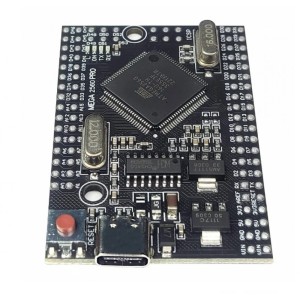
    The Arduino Mega 2560 R3 Green Board Edition 54 Digital I/O terminals (14 of which have programmable PWM outputs). 16 Analog Inputs. 4 UARTs (hardware serial ports). 16 MHz crystal clock. RoboticsBD Operating voltage: 6 ~ 12v. Dimensions: 110 x 53 x 15 mm.This Arduino Mega 2560 R3 was sourced from an unofficial supplier and is therefore marked as an...
    BDT 5,950
    BDT 5,950 tax incl.
    BDT 5,950 tax excl.
    BDT 5,950 tax excl.
    BDT 5,950 tax incl.
    BDT 5,950 tax incl.
    BDT 0 Tax
    BDT 5,950 tax excl.
    BDT 5,950 tax excl.
    BDT 0 Tax
    BDT 5,950 tax incl.
    More Arduino Mega 2560 R3
    Last items in stock
    In stock: 2
    3.5inch LCD Display Shield for Arduino with Touch Robotics Bangladesh

    Reference: RBD-2551

    3.5inch LCD Display Shield for Arduino with Touch

    (0)
    Supports development boards such as Arduino UNO and Mega2560 for plug-in use without wiring Arduino IL9486 Driver 480X320 resolution, clear display Support 16-bit RGB 65K color display, display rich colors 8-bit parallel bus, faster than serial SPI refresh On-board 5V/3.3V level shifting IC, compatible with 5V/3.3V operating voltage Easy to expand the...
    BDT 1,990
    BDT 1,990 tax incl.
    BDT 1,990 tax excl.
    BDT 1,990 tax excl.
    BDT 1,990 tax incl.
    BDT 1,990 tax incl.
    BDT 0 Tax
    BDT 1,990 tax excl.
    BDT 1,990 tax excl.
    BDT 0 Tax
    BDT 1,990 tax incl.
    More 3.5inch LCD Display Shield for Arduino with Touch
    In-Stock
    In stock: 19
    Arduino Uno SMD CH340G with Type-C Interface Robotics Bangladesh

    Reference: RBD-3173

    Arduino Uno SMD CH340G with Type-C Interface

    (0)
    Arduino UNO SMD CH340G with Type-C Interface – upgraded UNO R3 for modern connectivity. Features Type-C USB port for reliable data communication and easy connection with laptops. Powered by the Atmega328 microcontroller for stable and consistent performance. CH340G USB-to-serial chip ensures compatibility with Arduino IDE on all major OS. Fully compatible...
    BDT 490
    BDT 490 tax incl.
    BDT 490 tax excl.
    BDT 490 tax excl.
    BDT 490 tax incl.
    BDT 490 tax incl.
    BDT 0 Tax
    BDT 490 tax excl.
    BDT 490 tax excl.
    BDT 0 Tax
    BDT 490 tax incl.
    More Arduino Uno SMD CH340G with Type-C Interface
    In-Stock
    In stock: 90

    Reference: RBD-0009

    Arduino Mega 2560 R3

    (0)
    54 Digital I/O terminals (14 of which have programmable PWM outputs). 16 Analog Inputs. 4 UARTs (hardware serial ports). 16 MHz crystal clock. RoboticsBD Operating voltage: 6 ~ 12v. Dimensions: 110 x 53 x 15 mm.
    BDT 1,788 BDT 1,888
    BDT 1,888 BDT 1,788 tax incl.
    BDT 1,888 BDT 1,788 tax excl.
    BDT 1,888 BDT 1,788 tax excl.
    BDT 1,888 BDT 1,788 tax incl.
    BDT 1,888 BDT 1,788 tax incl.
    BDT 0 BDT 0 Tax
    BDT 1,888 BDT 1,788 tax excl.
    BDT 1,888 BDT 1,788 tax excl.
    BDT 0 BDT 0 Tax
    BDT 1,888 BDT 1,788 tax incl.
    More Arduino Mega 2560 R3
    In-Stock
    In stock: 6
    You might also like

    Reference: RBD-0436

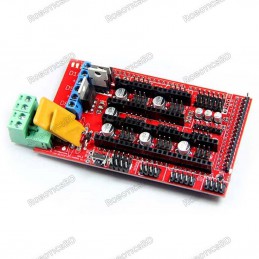
    3D Printer Controller for RAMPS 1.4 REPRAP MENDEL PRUSA

    (0)
    Supply Voltage: 12V Standard interfaces (as that of the extruder) Reserved GCI like I2C and RS232 3 MOSFET’s are applied to the heater/ fan and thermistor circuit. Another 5A added to protect the component parts. An 11A fuse is added to the hotbed. Support 5 stepper drive board
    BDT 670 BDT 700
    BDT 700 BDT 670 tax incl.
    BDT 700 BDT 670 tax excl.
    BDT 700 BDT 670 tax excl.
    BDT 700 BDT 670 tax incl.
    BDT 700 BDT 670 tax incl.
    BDT 0 BDT 0 Tax
    BDT 700 BDT 670 tax excl.
    BDT 700 BDT 670 tax excl.
    BDT 0 BDT 0 Tax
    BDT 700 BDT 670 tax incl.
    More 3D Printer Controller for RAMPS 1.4 REPRAP MENDEL PRUSA
    In-Stock
    In stock: 7

    Reference: RBD-0009

    Arduino Mega 2560 R3

    (0)
    54 Digital I/O terminals (14 of which have programmable PWM outputs). 16 Analog Inputs. 4 UARTs (hardware serial ports). 16 MHz crystal clock. RoboticsBD Operating voltage: 6 ~ 12v. Dimensions: 110 x 53 x 15 mm.
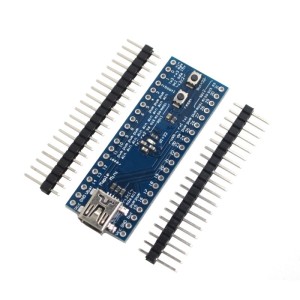
    BDT 1,788 BDT 1,888
    BDT 1,888 BDT 1,788 tax incl.
    BDT 1,888 BDT 1,788 tax excl.
    BDT 1,888 BDT 1,788 tax excl.
    BDT 1,888 BDT 1,788 tax incl.
    BDT 1,888 BDT 1,788 tax incl.
    BDT 0 BDT 0 Tax
    BDT 1,888 BDT 1,788 tax excl.
    BDT 1,888 BDT 1,788 tax excl.
    BDT 0 BDT 0 Tax
    BDT 1,888 BDT 1,788 tax incl.
    More Arduino Mega 2560 R3
    In-Stock
    In stock: 6
    Arduino Uno R3 Robotics Bangladesh Arduino Uno R3 Robotics Bangladesh

    Reference: RBD-0094

    Arduino Uno R3

    (0)
    The Arduino Uno R3 High-Quality Edition Arduino UNO in BangladeshMicro-controller : ATmega328. Operating Voltage : 5V. Input Voltage (recommended) : 7-12V. Digital I/O Pins : 14 (of which 6 provide PWM output). Analog Input Pins : 6. The Arduino Uno R3 High-Quality Edition embodies superior craftsmanship and meticulous attention to detail, resulting in...
    BDT 988
    BDT 988 tax incl.
    BDT 988 tax excl.
    BDT 988 tax excl.
    BDT 988 tax incl.
    BDT 988 tax incl.
    BDT 0 Tax
    BDT 988 tax excl.
    BDT 988 tax excl.
    BDT 0 Tax
    BDT 988 tax incl.
    More Arduino Uno R3
    In-Stock
    In stock: 480
    Mini Mega 2560 PRO (Embed) CH340G/ATmega2560-16AU Robotics Bangladesh Mini Mega 2560 PRO (Embed) CH340G/ATmega2560-16AU Robotics Bangladesh

    Reference: RBD-1214

    Mini Mega 2560 PRO (Embed) CH340G/ATmega2560-16AU

    (0)
    The board is compatible with Mega 2560.  excellent solution for developing projects based on ATmega2560. The board can be powered directly through the Micro USB connector The maximum output current upon 5V is around 800mA, while on the 3.3V it is about 800mA.
    BDT 1,990
    BDT 1,990 tax incl.
    BDT 1,990 tax excl.
    BDT 1,990 tax excl.
    BDT 1,990 tax incl.
    BDT 1,990 tax incl.
    BDT 0 Tax
    BDT 1,990 tax excl.
    BDT 1,990 tax excl.
    BDT 0 Tax
    BDT 1,990 tax incl.
    More Mini Mega 2560 PRO (Embed) CH340G/ATmega2560-16AU
    In-Stock
    In stock: 21

    Follow us on Facebook