Product Description
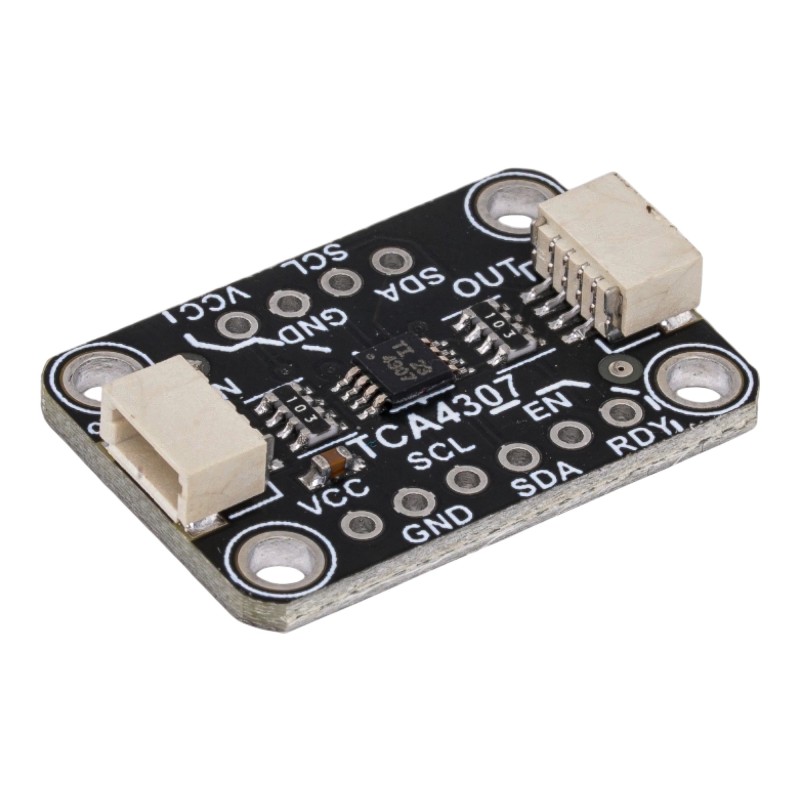
The TCA4307 Hot-Swap I2C Buffer is designed to make I2C connections safer and more reliable in real-world projects where devices may be plugged in or removed while powered. Since the I2C protocol was originally intended for fixed, on-board connections, hot-plugging sensors or peripherals can sometimes cause bus lockups or communication failures. This module solves that problem by isolating and protecting the main I2C controller from sudden changes on the bus.
The buffer sits between your I2C master (such as a microcontroller or single-board computer) and downstream I2C devices. When a peripheral is connected or disconnected, the TCA4307 prevents glitches, extra clock pulses, and capacitive loading from affecting the main bus. Power is passed through the board; it is not a power isolator, but a dedicated I2C signal buffer.
A key feature is automatic stuck-bus recovery. If either SDA or SCL is held low for approximately 40 ms, the device disconnects the downstream bus and generates up to 16 clock pulses to attempt to free the stuck peripheral. Once the bus is restored, communication resumes automatically.
The module also includes EN (Enable) and READY pins. EN allows manual connection or disconnection of the I2C bus segments, while READY indicates when the downstream bus is safely connected and ready for communication.
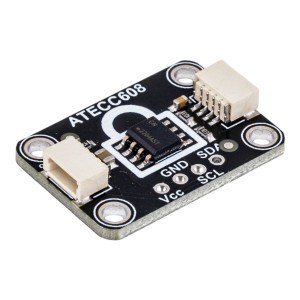
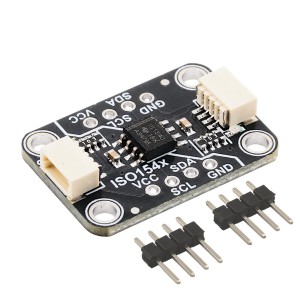
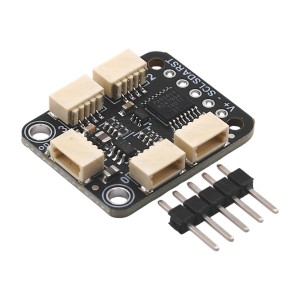
To simplify wiring, the board uses STEMMA QT / Qwiic connectors, enabling solder-free, plug-and-play I2C connections and easy daisy-chaining with other compatible devices.
Key Features
Safe hot-plugging support for I2C devices
Automatic stuck-bus detection and recovery
Generates recovery clock pulses to free locked devices
EN pin for manual bus control
READY pin to indicate safe communication state
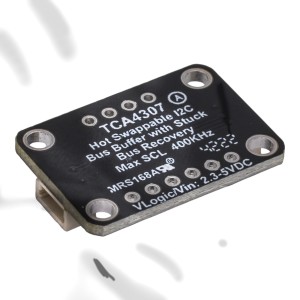
Supports standard and fast-mode I2C up to 400 kHz
Wide operating voltage range: 2.3 V to 5.5 V
Compatible with 3.3 V and 5 V logic systems
Dual STEMMA QT / Qwiic connectors for solder-free use
Typical Applications
Hot-pluggable sensor systems
Modular I2C device chains
Rapid prototyping and testing setups
Raspberry Pi, Arduino, and other microcontroller projects
Preventing I2C lockups in field-deployed systems
Package Includes
This module is ideal when you want robust, plug-and-play I2C connections without worrying about bus hangs, resets, or communication failures during device insertion or removal.